Small Batch Packaging: Machines, Costs and Compliance

Small batch packaging works when the line is built around changeovers, not top speed. Choose compact, adjustable filling, counting, capping and labelling equipment. Plan output from real weekly demand, not the machine’s brochure rate. Know the UK rules that apply however small the run: quantity control, labelling and producer responsibility.
This guide is for operations and procurement managers in pharmaceutical, nutraceutical, cosmetic and food and drink businesses moving from hand packing to machines. It covers what to automate first, how to size a line, and what UK law expects of you.
TL;DR
- Small batch packaging is limited by changeover time, cleaning and first-off approval, not by machine speed.
- Automate in the order that hurts most: usually filling or counting first, then capping, sealing and labelling.
- Packaged goods between 5 g and 25 kg, or 5 ml and 25 l, fall under UK quantity rules whatever the batch size.
- Machines that you modify or join together can lose their original safety compliance, so check the whole line.
- Choose adjustable, customisable machines that can grow into a line rather than single-purpose kit.
Table of Contents
- What small batch packaging means in practice
- Plan the line around changeovers, not speed
- Which machines to automate first
- Semi-automatic or automatic?
- UK rules that apply however small the batch
- Machine safety when you join machines together
- Our view: buy for the third product, not the first
- Choosing equipment for your sector
- Talk to us about your line
- FAQ
- Sources
What small batch packaging means in practice
There is no legal definition. In practice it means runs of a few hundred to a few thousand units, many product variants, and frequent switches between bottle sizes, fills and labels. Typical examples are a nutraceutical brand launching five blends, a cosmetics start-up making seasonal lotions, a veterinary pharmacy repacking tablets, or a food business producing sauces in limited flavours.
Much of what ranks for this phrase is about printed boxes and bags with low minimum orders. That is the packaging material. This article is about the other half: the machinery that fills, counts, closes and labels the pack on your own floor. If you are buying boxes, the same principle applies: design the pack so your line can handle it.
The economics differ from high-volume work. A machine running 10,000 units an hour is no use if you spend half the shift cleaning and adjusting it. In small batch work, you buy flexibility, repeatability and quick setup.
Plan the line around changeovers, not speed
The most common mistake when moving to automated small batches is to size the line on theoretical machine speed. Production engineering guidance points out that weekly demand should be turned into output targets that allow for cleaning, strip-down and first-off approval. Those three activities, not the filling itself, usually decide how many batches you can run in a week.
A simple way to do it:
- List every product and pack size you expect to run in a typical week.
- For each, note the units required and the number of separate batches.
- Estimate the time for changeover: clean-down, changing parts, adjusting guides, running first-off samples and getting them signed off.
- Add the changeover time to the pure running time. That total is your real capacity.
- Compare it with the shifts you can staff.
A worked example: you need 6,000 units a week across four products, so four batches of 1,500. If each changeover and approval takes 90 minutes, that is six hours of non-productive time before any bottle is filled. A machine twice as fast saves little. A machine that changes over in 30 minutes saves four hours.
This is why we always ask customers how many different products they run, not just how many units. Look for tool-free adjustment, clear scales on guides and settings you can record and repeat.
Which machines to automate first
You rarely need a complete line on day one. Start where manual work costs the most in time, accuracy or consistency, and make sure each machine can be joined to the next later.
Filling liquids, creams and gels
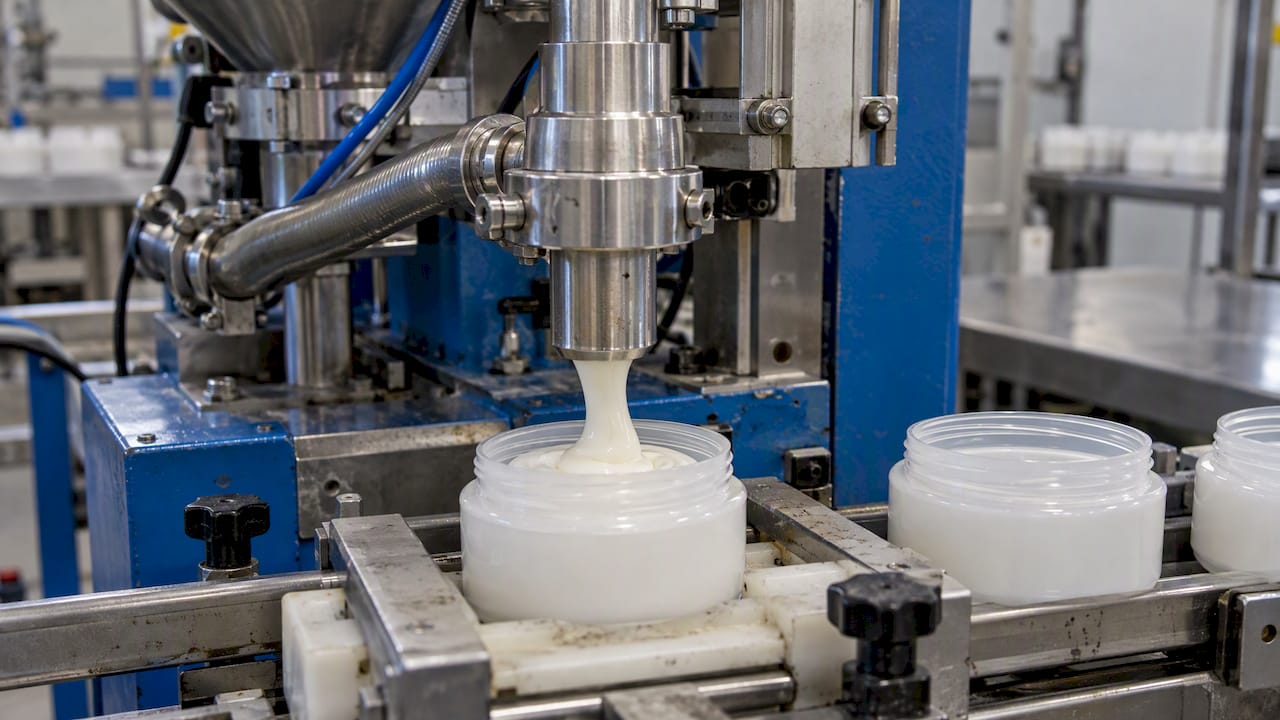
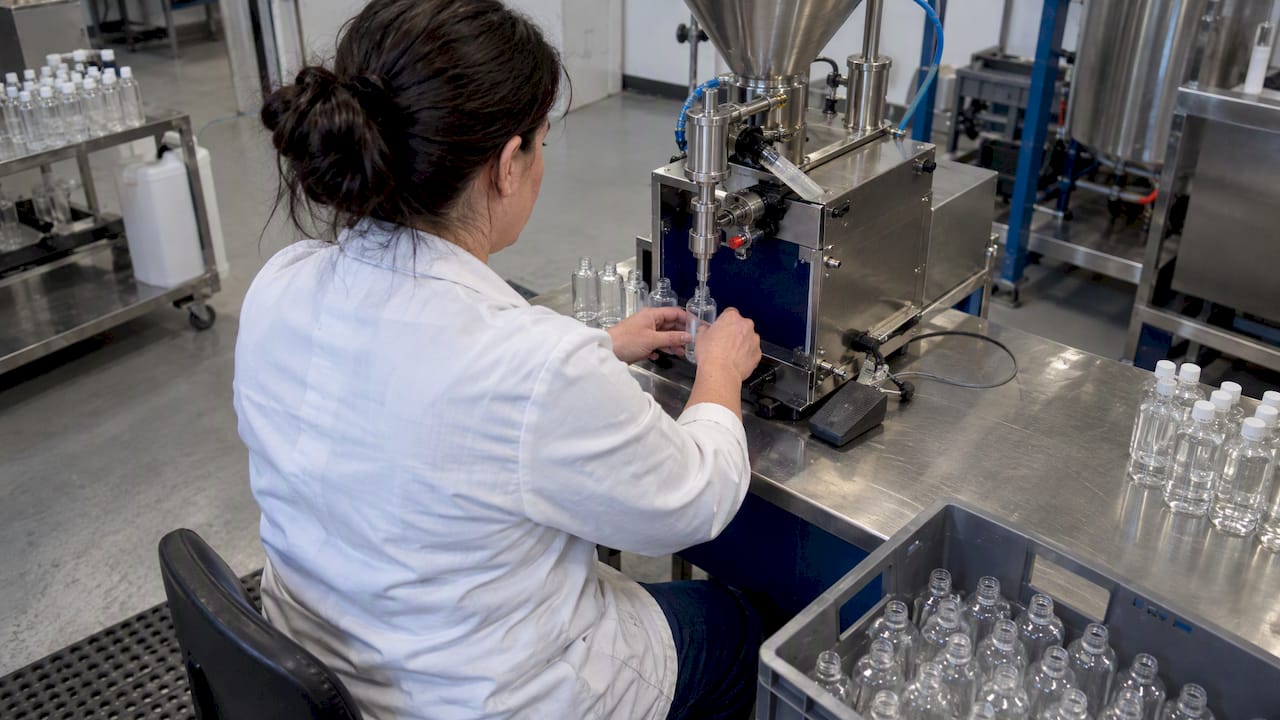
Manual filling is slow and inconsistent, and over-filling quietly eats margin. A semi-automatic or automatic filler gives repeatable volumes across viscosities, from thin liquids to thicker creams. For small batches, the key questions are how quickly the product-contact parts come apart for cleaning, and whether one machine can cover your range of fill volumes and container sizes. Our liquid filling machines range from semi-automatic benchtop units to automatic fillers, and the semi-automatic AF0010 liquid filler is a sensible place to start for low volumes.
Counting tablets, capsules and soft gels
Counting by hand is where errors and labour costs pile up for supplement and pharmacy packers. A counter that handles tablets, capsules and soft gels, with adjustable count settings, removes that bottleneck. If you want to see how the principle works before you buy, read how a tablet counting machine works. Our tablet counting machines include compact models such as the AC500 pill counter.
Capping and sealing
Inconsistent cap torque causes leaks, returns and complaints. Capping machinery handles screw, press-on and other closures. Where tamper evidence matters, as it does for supplements and medicines, induction cap sealing equipment adds a foil seal. For a plain explanation, see our page on how to seal bottle caps.
Labelling
Labelling is where small batch operations feel the most pain, because every variant has a different label. Look for machines that handle your container shapes, set up quickly and can apply batch and date codes. Semi-automatic options suit short runs; automatic ones suit regular volumes. Browse our labelling machines or read the overview of KBW labelling machines.

Accumulation and rotary tables
Once filling and capping are automated, an operator is often left feeding and collecting containers by hand. Accumulation and rotary tables buffer containers between machines so one slow stage does not stall the rest.
Semi-automatic or automatic?
| Factor | Semi-automatic | Automatic |
|---|---|---|
| Typical use | Frequent product changes, short runs | Regular products, steadier volumes |
| Operator involvement | Loads and triggers each cycle | Runs with minimal intervention |
| Changeover | Usually simpler and quicker | Can need more setup and approval |
| Budget | Lower entry cost | Higher, but lower labour per unit |
| Growth path | Can be upgraded or joined to other machines | Designed for line integration |
Neither is better in general. Many of our customers begin with semi-automatic machines and add automatic units as volumes settle. Our guide to packaging machines for small business goes further on this, and tips on selecting the right packaging machine lists the questions to settle before you request a quote.
UK rules that apply however small the batch
Small runs do not mean lighter obligations. Four areas catch new packers out.
Quantity control for packaged goods
The Weights and Measures (Packaged Goods) Regulations 2006 require the average content of packages to be no less than the stated quantity, and limit how many packages can be short by a given amount. The government’s guidance describes the scheme, which applies to products in the range of 5 g to 25 kg or 5 ml to 25 l. Keep records of your quality checks. A filler or counter that is accurate and repeatable makes this far easier to demonstrate. Trading Standards is the body to ask if you are unsure whether your product is in scope.
Medicines labelling and packaging
If you pack medicines, labelling is about unambiguous identification. The MHRA’s best practice guidance on labelling warns that lookalike and soundalike names and designs can lead to errors, and says new pack designs should be tested against current standards. It also covers timing: the guidance links the introduction of approved new packaging components to a six-month window, so check it with your Qualified Person before you change artwork or components. The wider framework is on the GOV.UK page on best practice in labelling and packaging of medicines, though that page dates from 2014, so rely on the 2026 guidance for current detail.
Cosmetics
If you sell cosmetics in Great Britain, the official guidance on making cosmetic products available requires, among other things, a Product Information File and compliant information on the packaging. Your Responsible Person should sign off labels before they go on a line.
Packaging waste and producer responsibility
The Producer Responsibility Obligations (Packaging and Packaging Waste) Regulations 2024 make businesses pay the cost of managing household packaging waste. Large producers, with turnover above £2m and more than 50 tonnes of packaging supplied, must register, report and pay fees. Small producers, above £1m turnover and 25 tonnes, must report annual tonnage by material. Many genuinely small operations fall below both thresholds, but growth can push you over quickly. The explanatory memorandum makes clear that fees depend on material and recyclability, so pack and closure choices made at the start have a lasting cost. Confirm your position with the regulator or an adviser.
Machine safety when you join machines together
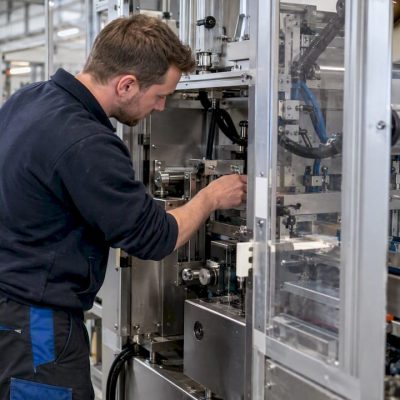
Buyers often treat a UKCA or CE mark as a one-off sticker. It is not. Modifying a machine, or linking stand-alone machines into a line, can create new trapping or electrical hazards and undermine the compliance of the original. A recent GOV.UK product safety report on a rotary sealing machine shows the risk: a rotating table with no safeguards left multiple entrapment points.
The UK’s designated standards for machinery include the EN 415 series on the safety of packaging machines, with updated editions listed in the June 2026 notice. Before you connect a filler to a capper and a labeller, ask who carries out the risk assessment for the combined line and what guarding and interlocks are fitted. If you are unsure, take advice from a competent machinery safety assessor.
Our view: buy for the third product, not the first
We have supplied packaging machines for over two decades, with more than 1,650 installations worldwide, and the pattern in small batch work is consistent. Customers buy for the product they have today, then launch a second and third that need a different bottle, viscosity or label. The machine that looked cheap becomes the constraint.

So we suggest three things. First, write down your next three products before choosing a machine, and ask the supplier to show how each would run. Second, treat changeover time as a specification, with the same weight as speed. Third, think about the line you may want in two years, so today’s machine can be joined to tomorrow’s. This is why we design and customise machines around your operation rather than offering a single fixed configuration, and why we support customers with training and ongoing maintenance after delivery.
The cheapest mistake to fix is the one you make on paper, before the machine arrives.
— Trevor
Choosing equipment for your sector
The priorities shift by industry:
- Pharmaceutical and veterinary: accurate counting, traceable batch coding and tamper evidence. See our pharmaceutical packaging machines and veterinary pharmacy range.
- Nutraceutical and supplements: frequent new formulations and a variety of bottle sizes. See nutraceutical packaging machines and health supplement packaging.
- Cosmetics: viscous products, attractive finishing and precise label placement. See cosmetics packaging machines.
- Pet care: a mix of liquids, supplements and treats. See pet care packaging machines.
Talk to us about your line
If you are moving from hand packing or outgrowing a first machine, we can help you size a line around your real product mix. Tell us your containers, products and weekly volumes, and we will recommend machines, customisation and training to match. Start with our packaging machinery range or go straight to the liquid filling machines or tablet counting machines. We do not publish prices, as each machine is configured to the job, so request a quote based on your specification.
FAQ
What is the minimum batch size for packaging machinery?
There is no fixed minimum. Semi-automatic machines suit runs of a few hundred units, because setup is fast and the machine needs little supervision. The real test is how often you change product: if you change daily, prioritise quick changeover over speed.
Do small batches still need to meet UK weights and measures rules?
Yes, if the product falls within 5 g to 25 kg or 5 ml to 25 l and is packed to a stated quantity. The packaged goods guidance sets out the checks, and you should keep records. Trading Standards can confirm how it applies to your product.
Should I buy semi-automatic or automatic machines first?
If you run many products in short runs, semi-automatic is usually the sensible start, because it is simpler to set up and clean. Move to automatic when volumes become steady enough to justify it. Choose machines that can be linked later so you do not start again.
Can I join machines from different suppliers into one line?
It is possible, but the combined line needs its own risk assessment, because integration can create new hazards and affect earlier compliance. Agree who is responsible for guarding, interlocks and documentation before you buy.
Sources
- Production Process Guides: fill, close, label and pack
- The Weights and Measures (Packaged Goods) Regulations 2006
- Packaged goods: weights and measures regulations, GOV.UK
- MHRA best practice guidance on labelling, July 2026
- Best practice in the labelling and packaging of medicines, GOV.UK
- Making cosmetic products available to consumers in Great Britain, GOV.UK
- The Producer Responsibility Obligations (Packaging and Packaging Waste) Regulations 2024
- Explanatory memorandum to the 2024 Regulations
- Product Safety Report: rotary single head sealing machine, GOV.UK
- Designated standards: machinery, notice of 4 June 2026