Packaging Machine Maintenance: A Practical UK Guide

Good packaging machine maintenance is a written plan, not a habit. You clean and inspect at set points, replace wearing parts before they fail, record what you did, and put the most effort into the machines that would hurt your output or product quality most if they stopped. This guide gives you a working schedule, a checklist you can adapt and the UK legal duties that sit behind it. It also covers the point at which a job belongs with the machine’s manufacturer.
TL;DR
- Combine three triggers: time (cleaning, lubrication), usage (parts that wear per cycle) and condition (noise, heat, drift). Relying on one usually means over- or under-maintaining.
- Rank your machines by criticality. Give the filler, counter or sealer that would stop the line the strictest routine.
- In the UK, PUWER requires work equipment to be kept in efficient working order and in good repair, and a maintenance log must be kept up to date where one exists.
- Pharmaceutical, nutraceutical and food lines need maintenance and cleaning records that stand up to a GMP audit.
- Operators handle daily checks. Calibration, drive work and safety-system repairs go to trained engineers or the manufacturer.
Table of Contents
- Why a schedule beats fixing things when they break
- Build the plan around three triggers
- Rank your machines before you rank your tasks
- A preventive maintenance schedule you can adapt
- Preventive maintenance checklist by machine type
- What UK law expects of you
- Maintenance on regulated lines: pharmaceutical, nutraceutical and food
- Spare parts and records that save the day
- Perspective: what we see from the manufacturer’s side
- Calling in the manufacturer
- Getting started this week
- FAQ
- Sources
Why a schedule beats fixing things when they break
A packaging line fails in small ways first. A nozzle drips, a label wanders by a millimetre, a capper torque setting drifts. Each one costs rejects and rework before it costs a stoppage. A schedule catches these while they are cheap.
There is also data behind planned, condition-aware upkeep. Sidel reported in 2022 that predictive maintenance can raise overall equipment effectiveness by up to 3% and extend part lifetime by up to 30% compared with purely time-based maintenance. That figure comes from a line-software supplier and relates to large bottling lines, so treat it as a direction, not a promise for a single semi-automatic filler. The principle holds at any scale: the more your maintenance responds to how the machine is actually being used, the less you waste.
Build the plan around three triggers
There is no universal interval that suits every machine. Reliability guidance describes the strongest approach as a blend of three triggers:
- Time-based: routine tasks that happen on a calendar, such as cleaning, lubrication and filter checks.
- Usage-based: tasks tied to cycles or output, such as replacing seals, belts or pump components after a set number of fills or hours.
- Condition-based: action when something changes, such as unusual vibration, heat, noise, or a drift in fill weight or count accuracy.
The same source warns that using only one method tends to waste money on parts that still work or to leave you with unplanned stops. In practice, start with the manufacturer’s manual for the calendar tasks, add usage counts from your own run data, and give operators a simple way to flag changes in condition.
Rank your machines before you rank your tasks
A common weakness in maintenance programmes is treating every asset with the same rigour. Maintenance scheduling specialists recommend a criticality analysis: rank assets by the impact of failure on safety, product quality and total line output, and concentrate your strictest preventive and predictive work there.
A simple three-tier version works for most packing halls:
| Tier | Test | Typical examples | Approach |
|---|---|---|---|
| A: critical | Failure stops the line or risks product quality or safety | Filler, tablet counter, induction sealer | Full schedule, spares held, records reviewed |
| B: important | Failure slows output but there is a workaround | Capper, labeller | Standard schedule, key spares |
| C: supporting | Failure is an inconvenience | Accumulation or rotary table, manual stations | Basic cleaning and inspection |
Your tiers depend on your line. A labeller is tier A if you cannot ship product without a compliant label, and a capper is tier A if your product needs a verified closure.
A preventive maintenance schedule you can adapt
Treat what follows as a template, not a substitute for your machine’s manual. Intervals depend on product, shifts per day and environment. Where this table and the manufacturer’s instructions differ, follow the manufacturer.
| Frequency | Who | Tasks |
|---|---|---|
| Start of every shift | Operator | Visual check for damage, leaks, loose guards and fittings; confirm guards and interlocks are in place; check air supply and pressure; run a few test cycles and check fill, count, torque or label position |
| End of every shift | Operator | Clean product contact parts and surrounding surfaces; remove residue, dust and label offcuts; log any faults or odd behaviour |
| Weekly | Operator or technician | Lubricate points specified in the manual; check belts, chains and sensors; inspect tubing, nozzles and seals for wear; check fasteners |
| Monthly | Technician | Check drive components and alignment; inspect electrical connections and emergency stops; verify calibration against a reference |
| Quarterly or by usage count | Technician | Replace wear parts on the usage schedule; check pump, valve and clutch performance; review fault log for patterns |
| Annually | Manufacturer or qualified engineer | Full inspection, safety function testing, calibration and documented service report |
Cleaning, lubrication, inspection and fastening are the core of any routine. Add adjustment and corrosion protection where your environment is damp or washdown is heavy.
Preventive maintenance checklist by machine type
The general tasks above apply everywhere. The wear points differ by machine, so here is what to look at on the main types found on pharmaceutical, nutraceutical, cosmetic and food lines.
Liquid filling machines
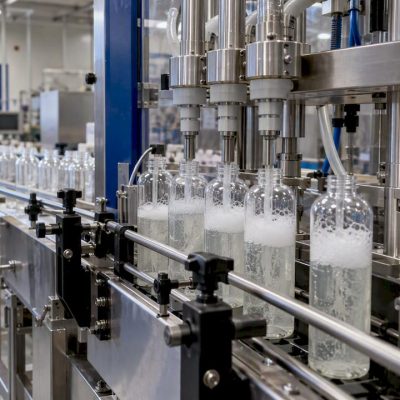
- Strip, clean and inspect nozzles, valves and tubing for residue build-up, especially with viscous products such as creams, gels or syrups.
- Check seals, o-rings and pump components for swelling, cracking or leaks, and replace them on your usage schedule.
- Run a fill-volume check across several containers and record the result. Drift is your earliest warning.
- Confirm drip-free shut-off and that no air is being drawn into the line.
Tablet and capsule counting machines
- Clear dust from hoppers, channels and sensor windows after each product run. Dust and powder residue cause false counts.
- Check vibration and feed settings and inspect for chipped or broken product fragments.
- Verify sensor function and count accuracy with a known quantity before each batch.
- Complete a full clean between products to prevent cross-contamination, and record it.
Capping machines
- Check chuck, clutch or pressing head wear and confirm applied torque is within specification.
- Inspect cap feed tracks and sorting for jams, burrs and debris.
- Confirm container handling parts, such as starwheels and belts, match the container in use and are not worn.
- Test a sample of closed containers for security at the start and end of each run.
Labelling machines
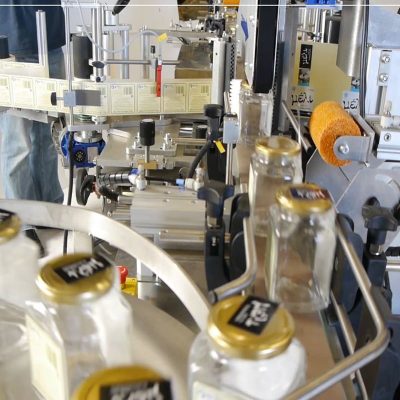
- Clean the label sensor, peel edge and rollers to remove adhesive residue.
- Check web path and tension, and replace worn rollers or belts.
- Verify label position and wrinkle-free application on samples from the start, middle and end of each run.
- Check batch and date coding is legible and correct where it is applied.
Induction cap sealing equipment
- Inspect cables, connections and cooling, and keep vents clear.
- Check seal quality on samples, looking for incomplete or uneven sealing.
- Confirm the sealing head is the right distance from the cap for the container height in use.
- Treat any electrical fault or overheating as an engineer’s job, not an operator’s.
Accumulation and rotary tables
- Check drive, bearings and surface for wear, and keep the surface clean.
- Confirm speed is matched to the filling or capping station to avoid pile-ups.
- Inspect guards and emergency stops.
What UK law expects of you
In Great Britain, the Provision and Use of Work Equipment Regulations 1998 (PUWER) set the baseline. The HSE says you must keep work equipment maintained in an efficient state, in efficient working order and in good repair, and keep a maintenance log up to date where a machine has one. Where equipment is exposed to conditions that could cause dangerous deterioration, it must be inspected so faults are found in good time. People who use, supervise or manage the equipment must also have adequate health and safety information and training.
Two practical consequences follow. First, your maintenance log is not paperwork for its own sake: it is your evidence that you meet the duty. Second, safe maintenance matters as much as the machine itself. Isolate energy sources before any intervention, never bypass guards or interlocks, and only let competent people work on electrical and safety-related systems. If you are unsure whether a task is in scope for your team, ask your health and safety adviser or consult the HSE guidance before you start, not after.

Maintenance on regulated lines: pharmaceutical, nutraceutical and food
On these lines, maintenance is part of quality assurance. Industry guidance on aseptic packaging machines, published by the German engineering federation VDMA, treats validated cleaning and sterilisation of machines as a core operating requirement. Its scope is aseptic food machines, so use it as a benchmark for rigour, not as the rule for every line. Failing to maintain equipment to the standard your quality system sets can lead to audit findings and, for medicines, to contamination risk.
For UK medicine manufacturers, the MHRA’s Orange Guide is the usual reference for GMP expectations, and your own quality system decides how maintenance is documented. In practice, auditors will want to see:
- a defined schedule for each machine and evidence it was followed;
- cleaning procedures between products and batches, with records;
- calibration records for anything that measures, such as fill volume or count;
- change control when a part, setting or lubricant changes;
- trained, named people carrying out each task.
Lubricants and cleaning agents on product contact areas should suit the product. Check your quality team’s approved list before changing either.
Spare parts and records that save the day
Two habits separate calm maintenance teams from firefighting ones.
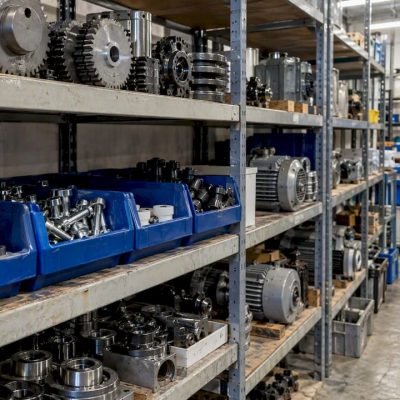
- Hold the right spares. For tier A machines, keep the parts that wear fastest and are slow to arrive: seals, o-rings, tubing, belts, sensors and nozzles. Ask the manufacturer for a recommended spares list when you buy.
- Write things down. Record what was done, by whom, the date, the machine hours or cycle count, and what was replaced. Patterns in this log tell you whether your intervals are too short or too long.
Training is part of this too. Operators who know what normal looks and sounds like give technicians useful detail when something changes, and that speeds up repairs.
Perspective: what we see from the manufacturer’s side

We build liquid filling, tablet counting, capping, labelling and induction sealing machines, and we have more than 1,650 installations worldwide behind that. The pattern we would pass on is simple: the machines that run well for years are rarely the ones with the most elaborate maintenance system. They are the ones where operators do short, consistent checks every shift, and where someone has written down the intervals and kept to them.
We would also say this. Buy for the way you will maintain the machine. A customised machine built around your containers and products is easier to keep accurate, because the change parts and settings match what you actually run. And ask about training and support before you sign, not after. Maintenance is far easier when the person who looks after the machine has been shown how it was designed to be looked after.
— Trevor
Calling in the manufacturer
Some jobs should not be handled in-house. Call the manufacturer or a qualified engineer when:
- accuracy cannot be restored by cleaning and re-setting;
- the fault involves electrical systems, drives or safety functions;
- a machine is being moved, changed over to a very different container or product, or integrated into a new line;
- you need documented annual servicing for audit purposes;
- the same fault keeps coming back.
If you are planning a new line or replacing an ageing machine, we offer installation and training and ongoing support and maintenance alongside the machines themselves, and we can tailor machinery to your products and containers. See our range of liquid filling machines, tablet counting machines, capping machinery and labelling machines, or talk to us about support and maintenance. If your sector has specific needs, our pages for pharmaceutical, nutraceutical and cosmetics packaging are a good place to start. If capital cost is the barrier to replacing an old machine, see our leasing programmes.
Getting started this week
- List every machine on your line and assign it a tier.
- Pull the manufacturer’s manual for each tier A machine and copy out the calendar tasks.
- Write a one-page shift-start checklist for operators and put it at the machine.
- Start a simple log: date, task, person, finding, parts used.
- After three months, review the log and adjust intervals where parts wore faster or slower than expected.
If you want to understand how the machines on your line fit together before you plan, our guide on how a packaging machine works explains the basics.
FAQ
How often should a packaging machine be serviced?
There is no single interval. Operators should check and clean it every shift, with weekly and monthly technician tasks and a documented service at least annually. Start with the manufacturer’s manual, then adjust using your own usage data and fault log.
What is the difference between preventive and predictive maintenance?
Preventive maintenance is planned work done on a schedule or usage count, before a failure. Predictive maintenance uses condition data, such as vibration, temperature or accuracy drift, to decide when to act. Most plants use a mix of both.
What are the first signs a packaging machine needs attention?
Look for drift in fill volume, count accuracy, label position or cap torque, plus new noises, heat, leaks or more frequent jams. These usually appear before a breakdown. Log them and investigate rather than simply re-adjusting.
Is packaging machine maintenance a legal requirement in the UK?
Yes. Under PUWER, employers must keep work equipment maintained in efficient working order and in good repair. If you are unsure how this applies to a specific machine, speak to your health and safety adviser or consult HSE guidance.
Sources
- HSE: Provision and Use of Work Equipment Regulations 1998 (PUWER) overview
- Sidel software suite for packaging line performance (Petnology, 2022)
- Preventive maintenance guide (Maintenease)
- Preventive maintenance schedule (Accruent)
- VDMA: Aseptic packaging machines for the food industry