Anti Drip Nozzles: Four Faults UK Filling Engineers Should Check

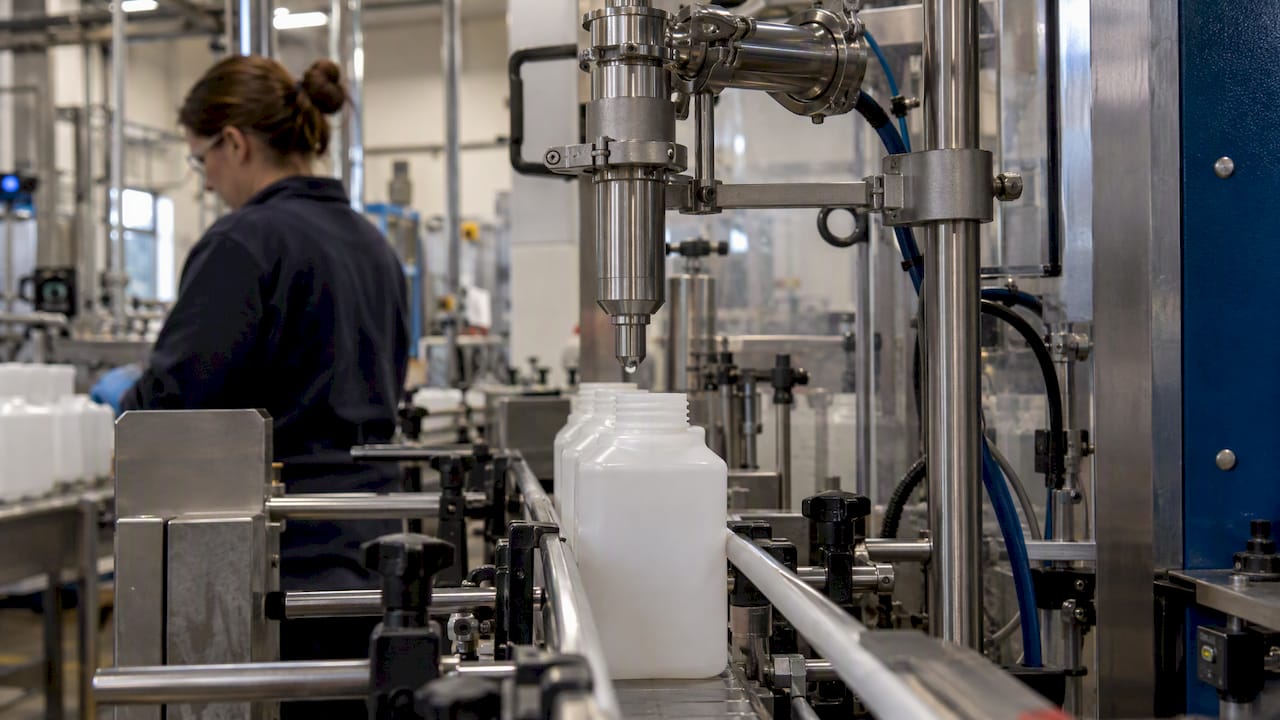
The most reliable way to stop dripping is a close-coupled mechanical shut-off at the orifice, a suck-back calibrated to the nozzle diameter, and a supply line verified free of trapped air. Nozzle material and bore size also shape how a product dries and clogs at the tip. We build liquid filling machines at KBW Packaging and commission them with this combination in mind.
TL;DR:
- Dripping after a restart points to trapped air more than worn seals; purge the line and verify air bleeds at its highest points.
- Suck back settings must match nozzle diameter: larger bores generally need less suction, while excessive suction can starve the next fill.
- Hydrophobic tips can delay drying and reduce clogging compared with stainless steel or glass, especially when product remains at the nozzle during stoppages.
- Small bores paired with thick products raise clogging risk, and undersized nozzles may demand pressure that makes shut off unstable.
- Test settings at production speeds because pump acceleration can affect suck back, and record results by product and nozzle for repeatable changeovers.
Table of Contents
- Why do nozzles drip in the first place?
- Which anti-drip mechanisms work best on a filling line?
- How do you choose nozzle size and material?
- What plumbing and installation fixes stop persistent drips?
- Which anti-drip features can you keep clean?
- What should you check when a nozzle starts dripping?
- What do operators most often get wrong at commissioning?
- How do we support anti-drip results at KBW Packaging?
- FAQ
- Sources
Why do nozzles drip in the first place?
Dripping is rarely a mystery once you sort the fault into one of four classes. According to industry guidance, nozzle dripping comes mainly from:
- worn valve seats or seals that no longer close cleanly
- air entrained in the product lines
- suck-back that is calibrated badly for the nozzle in use
- a shut-off geometry unsuited to the product’s viscosity and consistency
Air deserves special attention. The same guidance describes how air pockets compress during pumping and expand after the valve closes, pushing liquid out of the nozzle when the cycle should be finished. A line that drips only after a restart often has an air problem rather than a worn seal.
Bore size and viscosity then interact. A small orifice combined with a thick product raises the risk of droplet formation at the tip and of partial clogging, an effect seen in filling parameter experiments on high-concentration formulations. Diagnose the class of fault first, because replacing a nozzle will not cure an air problem.
Which anti-drip mechanisms work best on a filling line?
Three mechanisms do most of the work, and they are strongest in combination.
A mechanical shut-off at or near the orifice closes the flow path physically. Suck-back then relieves the liquid column after dosing, so no tail or string hangs from the tip. The same industry guidance stresses that suck-back must be calibrated alongside nozzle diameter, and that a larger diameter typically needs less suction than a smaller one.
Surface material is the third lever. Laboratory work on formulation-nozzle interactions found that hydrophobic nozzles, such as Teflon, siliconised surfaces and polymers, delay drying and reduce clogging compared with hydrophilic stainless steel or glass. Less plug formation means fewer residual tails at the tip.
Geometry and timing can also matter. Choose tip shape and shut-off timing with the product and container in mind.
- Mechanical shut-off: stops flow at the orifice itself.
- Suck-back: pulls the liquid column back to prevent tailing and stringing.
- Hydrophobic tips: slow drying and ease residue removal.
- Tip geometry: governs how the final droplet separates.
Pro Tip: Change one variable at a time, whether shut-off timing, suck-back volume or tip material, and record the result, or you will never know which change fixed the drip.
How do you choose nozzle size and material?
Match the nozzle to your product and your fill tolerance, then trial it on the line. These rules hold up in practice:
- Choose the internal diameter for your fill volume and viscosity. Per single-use needle research, diameter and material should follow the liquid’s characteristics and the container neck geometry.
- Avoid very small bores unless the product demands them. A nozzle sized too small can need excessive pumping pressure, which makes the shut-off unstable, as one selection note puts it.
- Consider hydrophobic tip materials when drying at the tip is a concern.
- Set nozzle diameter and pump settings together. Experiments show pump acceleration and nozzle size both influence suck-back behaviour, and the optimal setting varies by nozzle size and formulation.
- Trial the nozzle and settings with your own product before settling on a configuration.
Viscosity matching alone is not enough. The suitable nozzle configuration can vary with the product, so we review its characteristics before making a recommendation.
What plumbing and installation fixes stop persistent drips?
When drips continue, check for air in the supply line. Air pockets can compress during pumping and expand after valve closure, pushing liquid out.
- Fit automatic air-bleed points at the highest parts of the supply and check that they actually operate.
- Check the supply system for places where air may collect.
- Inspect valve seats and seals for wear.
- Calibrate suck-back in the live system across the acceleration range you actually run.
That last point matters because bench settings rarely transfer unchanged. The filling parameter work found pump velocity has a relatively weak effect on suck-back volume while acceleration may have a moderate one, so test at production speeds. We offer filling systems.
Which anti-drip features can you keep clean?
Consider cleaning and validation when choosing an anti-drip design, and assess whether its components are accessible for cleaning.
Single-use polymer and stainless steel nozzles involve different material and cleaning considerations. Choose between them based on your product and process requirements, and consult sterile filling needle research on nozzle design and material selection.

Idle time deserves its own line in your plan. If product dries at the tip during stoppages, consider the cleaning plan and whether a hydrophobic surface is suitable.
What should you check when a nozzle starts dripping?
Work through these steps in order before changing hardware:
- Inspect valve seats and seals for wear, and replace any that show it.
- Purge the supply lines and confirm the automatic air-bleed valves work. Recheck after a short run.
- Run short test batches while adjusting suck-back, noting its effect on tailing.
- If drying or clogging appears, try a hydrophobic tip or a larger nozzle bore.
- Confirm your cleaning procedure and its residues do not alter wetting behaviour at the tip.
Pro Tip: Log suck-back settings against product and nozzle in a shared sheet, so the next changeover starts from a known-good value instead of a guess.
What do operators most often get wrong at commissioning?
Over-adjusting suck-back can cause starved starts on the next fill. Treat the nozzle as part of a system with the pump and control logic, and assess their settings together during commissioning.
— Trevor
How do we support anti-drip results at KBW Packaging?
We supply liquid filling machines and offer installation, commissioning, training and maintenance support. If drips are costing you product or line time, ask us for a process review or a demonstration based on your product’s viscosity and your container geometry.

Contact our team through Kbw-packaging and tell us what you are filling.
FAQ
What causes a filling nozzle to drip after the valve closes?
The usual causes are worn valve seats or seals, air in the product line, poorly calibrated suck-back and a shut-off unsuited to the product’s viscosity. Air is easy to miss, because it compresses during pumping and expands after closure. Check the common root causes in that order.
How does suck-back stop a nozzle dripping?
Suck-back pulls the liquid column slightly back into the nozzle after dosing, so no tail or string hangs from the tip. It must be matched to the nozzle diameter, since a larger bore typically needs less suction. Too much suction can cause starved starts on the next fill.
Are hydrophobic nozzle tips worth using?
For viscous or proteinaceous products, often yes. Laboratory work on formulation-nozzle interactions found hydrophobic materials delay drying and reduce clogging compared with hydrophilic stainless steel or glass. Always trial them with your own product.
Should I choose single-use or stainless steel nozzles?
Single-use polymer and stainless steel nozzles have different material and cleaning considerations. The right choice depends on your product, your QA requirements and how long the line sits idle.
Sources
- Drips and Clogs: Overcoming Sterile Filling Needle Challenges
- Filling of high-concentration monoclonal antibody formulations into pre-filled syringes: filling parameter investigation and optimization. – PDF Download Free